All-on-4 vs Traditional Dental Implants Cost: What You'll Actually Pay
If you're missing most or all of your teeth, you've probably run into two very different treatment paths: All-on-4 and traditional full-mouth implants. Both replace an entire arch of teeth, but they get there in very different ways, and that difference shows up directly in your bill.
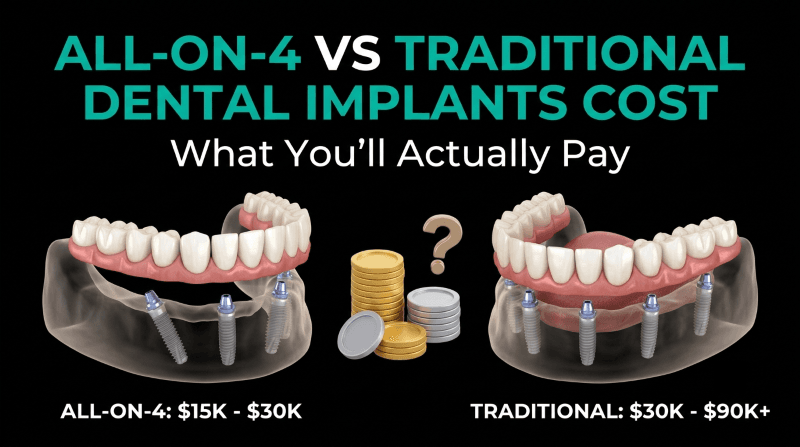
Quick answer: All-on-4 typically costs between $15,000 and $30,000 per arch, while traditional full mouth dental implants cost between $30,000 and $90,000 or more per arch. The gap comes down to how many implants are placed, whether bone grafting is needed, and how much lab and surgical time goes into the case.
Let's break down where that difference actually comes from so you can figure out which option makes sense for your mouth and your budget.
What Is All-on-4?
All-on-4 uses just four strategically angled implants to support a full arch of replacement teeth. The technique was designed specifically to avoid bone grafting in most cases, which is one of the biggest reasons it costs less than the traditional approach.
Because fewer implants are placed, there's less surgical time, fewer components, and often a faster healing timeline.
Many patients even leave with a temporary full arch of teeth the same day as surgery.
What Are Traditional Full-Mouth Implants?
Traditional full-mouth implant treatment usually places 6 to 8 (or more) implants per arch, one for roughly every missing tooth or every couple of teeth.
This is closer to how individual implant-supported denture costs add up, since more implants mean more surgical sites, more materials, and often more follow-up visits.
This approach is often recommended when a patient has enough healthy jawbone to support more implants or when a dentist wants maximum stability for the long term without relying on angled placement. If you have dental coverage, check out our guide on calculating your out-of-pocket implant costs with insurance to see how much of this you might actually pay.
All-on-4 vs Traditional Dental Implants Cost Comparison: Side-by-Side
Here's a general breakdown.
| Factor | All-on-4 | Traditional Full-Mouth Implants |
|---|---|---|
| Implants per arch | 4 | 6-8+ |
| Average cost per arch | $15,000-$30,000 | $30,000-$90,000+ |
| Bone grafting usually needed? | Rarely | Often, especially with bone loss |
| Same-day temporary teeth? | Usually yes | Less common |
| Healing/treatment timeline | Faster | Longer, especially with grafting |
For both options, if you need upper and lower arches done, you can roughly double the numbers above. Try our dental implant cost calculator to get a more personalized estimate before your consultation.
Conclusion
The real difference between All-on-4 vs traditional dental implants cost isn't just a number; it's a reflection of two different surgical philosophies. All-on-4 trades a slightly reduced number of implants for speed and often lower cost, while traditional full-arch implants prioritize maximum support, sometimes at a higher price.
Talking with an oral surgeon about your bone health and long-term goals is the best way to know which path fits you, and running your numbers through a dental implant cost calculator first can help you walk into that conversation prepared.
Frequently Asked Question
Can I switch from All-on-4 to traditional implants later if needed?
Yes, though it usually requires additional bone grafting and a new treatment plan, which adds cost.
Does insurance cover either option differently?
Most dental insurance treats both as major restorative work with similar coverage caps, typically $1,000-$1,500 per year. Neither option usually gets significantly better coverage than the other, since insurers often classify both under prosthodontic care.
How long do All-on-4 implants typically last compared to traditional implants?
Both can last 15-20 years or longer with proper care, though the attached bridge or denture may need replacement every 10-15 years regardless of which implant method was used. The implants themselves are usually the longer-lasting component.
Is financing more available for one option over the other?
Most oral surgery practices offer the same financing options (CareCredit, in-house payment plans) regardless of treatment type. The total loan amount will simply be higher for traditional implants due to the higher upfront cost.
Do both options require the same number of follow-up visits?
Traditional full-mouth implants generally require more follow-up visits due to additional healing stages, especially if grafting was involved. All-on-4 patients often have a more condensed follow-up schedule since fewer surgical sites need monitoring.
Independent team compiled of US pricing researchers and software engineers providing transparent restorative and cosmetic pricing analysis since 2026.
Ready to get your personalized cost estimate?
Get an adjusted single-tooth or full-mouth quote for your state in under 2 minutes.