How Much Does a Single Dental Implant Really Cost?
If you're missing a tooth and researching your options, the cost of dental implants per tooth is probably the first question on your mind.
It's a fair one; implants are one of the more significant dental investments you can make, and prices vary more than most people expect.
The short answer: a single tooth implant typically costs between $3,000 and $6,000 per tooth, including the implant post, abutment, and crown. But that range depends heavily on where you live, your dentist's experience, and whether you need any additional procedures first.
Let's break down what actually drives that price so you can budget with realistic expectations instead of guessing.
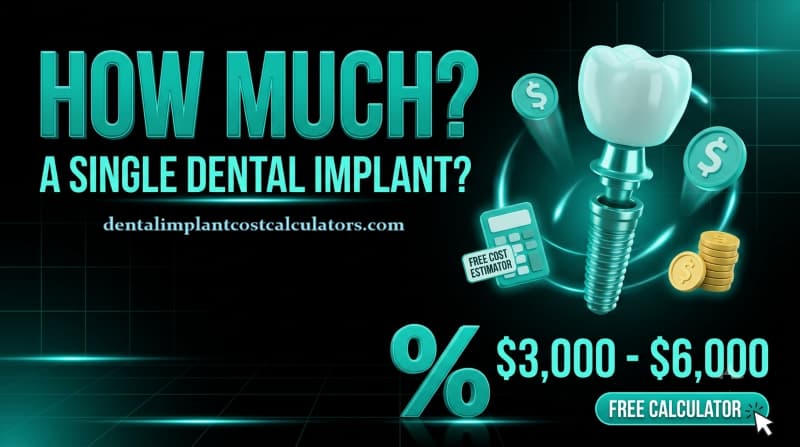
If you want a clearer sense of your potential costs before booking a consultation, our free dental implant cost calculator can help you estimate pricing based on your specific situation.
What's Included in the Cost of Dental Implants Per Tooth
When dentists quote the cost of dental implants per tooth, they're usually referring to three separate components:
The implant post: the titanium screw placed into the jawbone
The abutment: the connector piece between the post and the crown
The crown: the visible, tooth-shaped part that replaces your missing tooth
Some clinics bundle these into one price. Others itemize each piece separately. Here's how to read an itemized dental implant quote if you want to compare offers accurately, which is why two quotes for the "same" implant can look wildly different on paper even when the total is similar.
Single Tooth Implant Price by Region
Implant pricing varies noticeably by geography. Clinics in major metro areas tend to charge more due to higher overhead, while suburban and rural practices are often more affordable without sacrificing quality.
If you're comparing quotes, it's worth checking pricing at two or three practices within a reasonable driving distance rather than assuming your first quote is standard.
Average Dental Implant Cost: What Affects the Price
Several factors push the average dental implant cost up or down:
Bone density and jaw health: If you've lost bone density where the tooth is missing, you may need a bone graft first. This adds a separate procedure and cost before the implant itself can be placed.
Implant material and brand: Not all implant systems are priced the same. Premium, well-researched brands with strong long-term data tend to cost more than newer or generic alternatives.
Location of the missing tooth: Front teeth often require more precise, cosmetic-focused work than back molars, which can affect price.
Dentist vs. specialist: A general dentist may charge less than an oral surgeon or periodontist, though specialists often have more experience with complex cases.
Additional Procedures That Add to Total Cost
It's common for patients to need more than just the implant itself. Bone grafting, sinus lifts (for upper back teeth), or tooth extraction beforehand can each add anywhere from a few hundred to over a thousand dollars to your total treatment cost. Always ask your dentist directly whether your case is likely to need any of these steps.
Dental Implant Cost Without Insurance
Many patients are surprised to learn that most dental insurance plans offer limited coverage for implants, and some exclude them entirely. If you're facing the dental implant cost without insurance, here's what typically helps:
- In-house payment plans offered directly by dental practices, often interest-free for 6-12 months
- Third-party financing through companies like CareCredit, which spreads payments over longer terms
- Dental savings plans, which aren't insurance but offer discounted rates at participating providers
- Health Savings Accounts (HSAs) or Flexible Spending Accounts (FSAs), if you have access to one through an employer.
Quick Answer: How Much Is One Dental Implant?
For readers who just want the number: a single tooth implant, including post, abutment, and crown, generally costs $3,000 to $6,000 in the United States. Costs at the lower end usually apply to straightforward cases with a healthy jawbone and no additional procedures needed. Cases requiring bone grafting or specialist care tend to fall at the higher end or beyond it.
Frequently Asked Questions
Is the cost of a dental implant a one-time payment or ongoing?
Implants are generally a one-time cost with no recurring fees, unlike dentures, which may need periodic relining or replacement. However, if a crown is damaged years later, replacing just the crown is usually far less expensive than the original full procedure.
Does implant cost differ between front teeth and back teeth?
Yes, front tooth implants are often priced slightly higher due to the cosmetic precision required for a natural-looking result. Back tooth implants prioritize function over appearance, which can sometimes simplify the procedure.
How long does a dental implant typically last before needing replacement?
With proper care, the implant post itself can last 20+ years or even a lifetime in many cases. The crown on top may need replacement after 10–15 years due to normal wear.
Can I get a same-day dental implant, and does it cost more?
Same-day implants exist but usually require ideal bone density and healing conditions, and they often carry a premium price due to specialized equipment and same-day lab work. Not every patient is a candidate, so this depends on a dentist's evaluation.
Do dental schools offer cheaper implant procedures?
Some dental schools offer implant procedures at reduced rates since the work is performed by supervised students in training. Treatment timelines are often longer, but this can be a legitimate option for patients working with a tighter budget.
Independent team compiled of US pricing researchers and software engineers providing transparent restorative and cosmetic pricing analysis since 2026.
Ready to get your personalized cost estimate?
Get an adjusted single-tooth or full-mouth quote for your state in under 2 minutes.