Implants vs Dentures vs Bridges: The Real 10-Year Cost Comparison
If you're weighing implants vs dentures vs bridges cost, here's the short answer: Dentures are the cheapest option upfront, bridges sit in the middle, and implants cost the most to start.
But when you add up a full decade of repairs, replacements, and redos, that ranking often flips. For a broader look at how these options stack up, see our full tooth replacement cost comparison. Implants typically end up the most cost-effective option over 10 years, while dentures can quietly become the most expensive due to repeated relines and replacements.
That's the headline. The real answer depends on your mouth, your budget, and how many teeth you're replacing, so let's break down the numbers for each option.
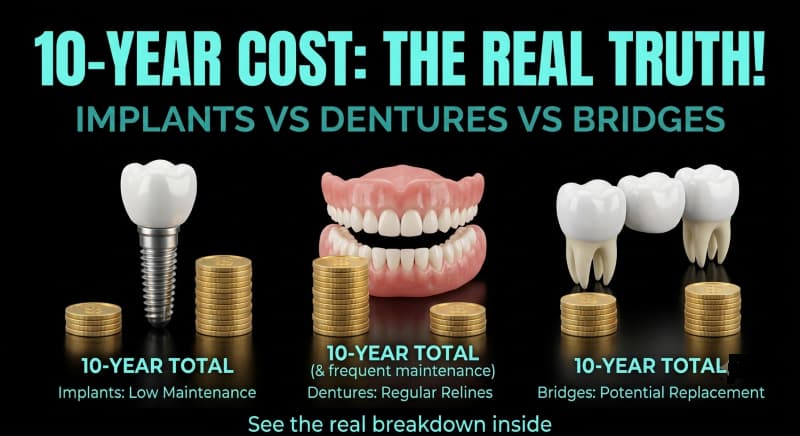
Quick Answer: Which Is Cheapest Over 10 Years?
For a single missing tooth, a dental implant typically costs $3,000–$6,000 upfront but rarely needs replacement, putting its 10-year total near the same number.
A bridge costs less upfront ($1,500–$3,000) but usually needs replacing once within a decade, pushing its 10-year total higher. Full dentures cost the least upfront ($1,000–$3,000) but typically need relining every 1–2 years and full replacement every 5–7 years, often making them the most expensive option by year 10.
| Option | Avg. Upfront Cost | Typical Lifespan | 10-Year Total (Low–High) | Maintenance/Replacement Needed |
|---|---|---|---|---|
| Dental Implants | $3,000–$6,000 per tooth | 15–25+ years | $3,300–$6,800 | Occasional crown replacement, routine cleanings |
| Dental Bridges | $1,500–$3,000 per section | 5–15 years | $2,800–$5,500 | Likely one full replacement, possible abutment tooth issues |
| Full/Partial Dentures | $1,000–$3,000 | 5–7 years | $3,500–$8,000+ | Relines every 1–2 years, full replacement every 5–7 years |
These are general ranges based on typical U.S. pricing. Actual costs vary by dentist, region, materials, and case complexity, and this article isn't a substitute for a personalized quote from a licensed dentist. You can use our dental implant cost calculator to get a ballpark figure based on your specific case, and a licensed dentist or prosthodontist can confirm which option fits your situation and budget.
Dental Implants: Cost Breakdown Over 10 Years
Dental implant costs are the highest upfront investment of the three, largely because they involve a surgical procedure, a titanium post, and a custom crown.
What drives the cost:
- Number of teeth being replaced
- Whether bone grafting is needed
- Single implant vs. implant-supported bridge or denture
- Geographic location and dentist experience. For a detailed breakdown, check out our guide on the cost of dental implants per tooth.
Year-by-year checkpoints:
- Year 1: Full upfront cost, including surgery, healing period, and final crown placement.
- Year 5: Minimal additional cost. Most implants only need routine checkups and cleanings.
- Year 10: The crown (the visible tooth part) may need replacement in some cases, typically $500–$1,500, while the implant post itself usually remains intact for decades.
Because the implant fuses with the jawbone, it's the only of the three options that also helps preserve bone density, a long-term tooth-replacement cost factor people often overlook.
Bone loss from missing teeth can eventually affect the fit of dentures or bridges, adding hidden costs down the line.
Does dental implant maintenance cost add up over time?
Not significantly. Beyond regular dental visits, dental implant maintenance cost is usually limited to standard oral hygiene. This is a major reason implants often win the long-term cost comparison despite the higher starting price.
Dental Bridges: Cost Breakdown Over 10 Years
A bridge replaces one or more missing teeth by anchoring a false tooth to the adjacent natural teeth (or implants), which are shaped down to hold crowns.
What drives the cost:
- Traditional bridge vs. implant-supported bridge
- Number of teeth involved
- Material (porcelain, zirconia, metal alloy)
- Condition of the abutment (anchor) teeth
Year-by-year checkpoints:
- Year 1: Full upfront cost, including reshaping the anchor teeth and fitting the bridge.
- Year 5: Possible minor repairs if the bridge shifts or an anchor tooth develops decay underneath the crown.
- Year 10: Many traditional bridges reach the end of their functional life around this point, and bridge lifespan cost often includes a full replacement, especially if an anchor tooth has weakened.
What's the average dentures vs implants cost comparison over time?
When people compare dentures vs implants cost comparison, the upfront numbers favor dentures. But once you factor in relines, adhesives, and full replacements over a decade, dentures frequently cost more in total than implants, particularly for someone replacing several teeth.
Dentures: Cost Breakdown Over 10 Years
Dentures are removable and replace some or all of the teeth in an arch. They're the least invasive and least expensive option to get started.
What drives the cost:
- Full dentures vs. partial dentures
- Standard vs. premium materials
- Implant-supported (snap-in) dentures vs. traditional removable dentures
Year-by-year checkpoints:
- Year 1: Initial fitting and full set cost.
- Year 3–5: Relines are typically needed as the jawbone naturally changes shape, plus ongoing adhesive costs.
- Year 5–7: Many traditional dentures need full replacement due to wear, fit changes, or bone loss under the denture base.
- Year 10: A second full replacement is common for people who got their first set early in the decade.
Total Cost of Ownership: All Three Options Side by Side
Here's how the numbers typically compare for a single missing tooth over a full decade:
| Option | Year 1 Cost | Additional Costs (Years 2–10) | Estimated 10-Year Total |
|---|---|---|---|
| Implant | $3,000–$6,000 | $0–$1,500 (occasional crown work) | $3,300–$6,800 |
| Bridge | $1,500–$3,000 | $1,500–$3,000 (likely one replacement) | $2,800–$5,500 |
| Dentures | $1,000–$3,000 | $2,000–$5,000 (relines, adhesives, replacements) | $3,500–$8,000+ |
For multiple missing teeth, the gap often widens further in favor of implants, since bridges and dentures both face compounding wear and refitting needs as more teeth are involved.
Which Option Actually Saves You Money?
There's no single right answer for everyone. It depends on a few factors:
- If upfront budget is your main constraint: dentures or a traditional bridge will be easier to afford right now, even if the long-term total is higher.
- If you're replacing teeth for the long haul (10+ years): implants typically offer the lowest total cost of ownership, assuming you're a good candidate for the procedure.
- If your jawbone health is a concern: implants also help preserve bone density, which can prevent additional costs tied to bone loss later.
- If you have limited healing time or health conditions that complicate surgery: a bridge or denture may be the more realistic option regardless of long-term cost.
Frequently Asked Questions
Does insurance cover implants, dentures, or bridges?
Coverage varies significantly by plan and provider. Many dental insurance plans cover a portion of bridges and dentures since they're often classified as major restorative work, while implants are sometimes only partially covered or treated as a separate benefit category.
What's the cheapest option if I only care about upfront cost?
Full or partial dentures are typically the cheapest option to get started, often costing less than half of a single dental implant. However, this doesn't account for relines, adhesives, and replacements you may need over the following years.
Can I switch from dentures to implants later?
Yes, many people start with dentures and transition to implants later, though this may involve additional costs like bone grafting if jawbone density has decreased in the meantime.
Do implant-supported dentures cost more than traditional dentures?
Implant-supported (snap-in) dentures cost more upfront than traditional dentures because they require implant placement, but they typically last longer and need fewer relines. Over a decade, the total cost can be closer to traditional dentures than the upfront price suggests.
How many teeth can a single bridge replace?
A traditional bridge typically replaces one to three consecutive missing teeth, anchored by the natural teeth on either side. Replacing more teeth than that usually requires a different approach, such as multiple bridges, a partial denture, or implant-supported options.
Independent team compiled of US pricing researchers and software engineers providing transparent restorative and cosmetic pricing analysis since 2026.
Ready to get your personalized cost estimate?
Get an adjusted single-tooth or full-mouth quote for your state in under 2 minutes.