Zirconia vs Acrylic Full-Arch Implants: The Real Price Gap
If you're comparing zirconia vs acrylic full-arch implants cost, the short answer is this: zirconia typically runs $2,000 to $6,000 more per arch than acrylic. That gap isn't padding or upselling. It comes down to material cost, lab time, and how long each option is built to last.
This detailed article explains the actual numbers, explains why the price difference exists, and helps you figure out which material fits your budget and long-term goals.
You can also use our full-arch implant cost calculator to get a starting estimate before your consultation.
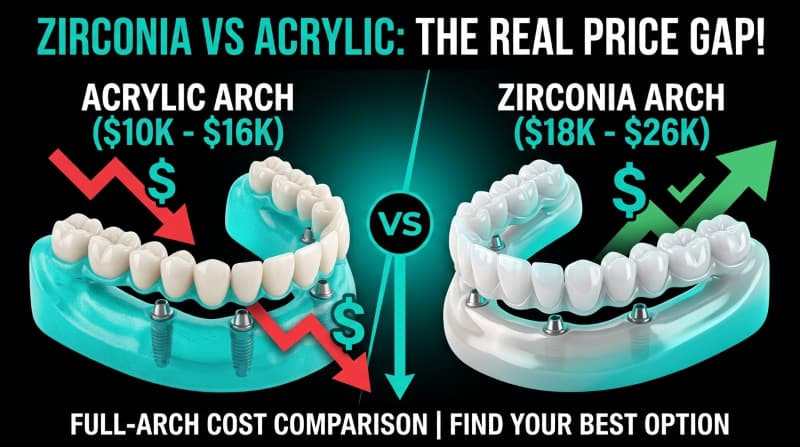
Zirconia vs Acrylic Full-Arch Implants: Cost at a Glance
For a quick answer: acrylic full-arch implants generally cost $10,000–$16,000 per arch, while zirconia full-arch implants run $18,000–$26,000 per arch.
The difference comes from material durability, milling precision, and lab labor, not just brand markup.
| Factor | Acrylic (PMMA) | Zirconia |
|---|---|---|
| Average cost per arch | $10,000–$16,000 | $18,000–$26,000 |
| Expected lifespan | 5–7 years before replacement | 15–20+ years, often lifetime |
| Chip/crack risk | Higher, especially at connector points | Very low, chips are rare |
| 10-year maintenance/replacement cost | $6,000–$12,000 (1–2 replacements likely) | $500–$2,000 (minor repairs only) |
| Aesthetic finish | Good, but can yellow or dull over time | Excellent, holds color and shine long-term |
Costs vary by provider, location, and case complexity. The table above reflects general US pricing ranges, not a quote for any specific patient.
Why the Price Gap Exists
The cost difference between these two materials isn't arbitrary. Three factors drive it.
Material Cost Differences
Zirconia implant cost starts higher because zirconia itself is more expensive to source and process than acrylic.
It's a dense ceramic that requires specialized milling equipment to shape accurately, while PMMA acrylic teeth cost stays lower because the material is easier to mold and mass-produce.
Lab and Milling Time
Zirconia restorations are milled from solid blocks using CAD/CAM systems, then sintered in a high-heat furnace, a process that can take hours per arch. Acrylic can be fabricated faster, which lowers the lab's labor cost and, in turn, what gets passed on to the patient.
Durability and Long-Term Value
This is where the full-arch implant cost comparison shifts in zirconia's favor over time. A zirconia crown cost reflects a material that resists wear, staining, and cracking far better than acrylic.
Acrylic, being softer, tends to wear down or chip within 5 to 7 years, often requiring a reline or full replacement.
Acrylic Full-Arch Dentures Cost: What You're Actually Paying For
Acrylic full-arch dentures cost less upfront because the material and process are simpler, not because the treatment itself is lower quality. Acrylic remains a solid option for patients who want a functional, natural-looking smile without the highest price tag.
That said, acrylic has real tradeoffs:
- Softer material means more visible wear over time
- Higher chance of needing a reline or replacement within a decade
- Slightly more prone to staining from coffee, tea, or wine
For patients on a tighter budget or those who plan to upgrade materials later, acrylic is often the practical starting point.
Full Mouth Dental Implant Material Cost: Zirconia's Case for Value
When people look at full mouth dental implant material cost purely by sticker price, zirconia looks expensive. But when you factor in dental implant material lifespan, the math changes.
Acrylic often needs replacement once or twice over 15 years, and each replacement adds $3,000–$6,000 or more. Zirconia, built to last 15–20 years or longer, may need only minor adjustments in that same window. For patients planning to keep their implants long-term, zirconia can end up costing less over the life of the restoration, even though it costs more on day one.
All-on-4 Zirconia vs Acrylic: Does the Technique Change the Price Gap?
The All-on-4 zirconia vs acrylic comparison follows the same general pattern as any full-arch case. The surgical technique (how many implants are placed and where) affects the total treatment cost, but the material choice on top of that technique still drives the same $2,000–$6,000+ gap per arch. If you're comparing All-on-4 quotes, make sure you know which material is included before comparing prices side by side.
If you want to see how the All-on-4 approach compares to All-on-6 in terms of implant count and total cost, our All-on-4 vs All-on-6 cost comparison breaks that down separately from the material question.
Which Material Is Right for Your Budget?
It depends on your priorities.
Choose acrylic if:
- You need a lower upfront cost
- You're comfortable with a replacement or reline down the line
- You want a functional, good-looking result without the premium price
Choose zirconia if:
- You want the longest possible lifespan from your implants
- You'd rather pay more now than replace materials later
- Chip resistance and long-term aesthetics matter most to you
FAQs
How much more does zirconia cost compared to acrylic for a full arch?
Zirconia typically costs $2,000 to $6,000 more per arch than acrylic, depending on the provider and case complexity. The gap reflects material cost and lab milling time rather than markup.
Can I switch from acrylic to zirconia later if I start with acrylic?
Yes, many patients start with acrylic as a transitional or budget-friendly option and upgrade to zirconia later. This usually requires a separate procedure and additional cost, since the abutments and framework may need adjustment.
Does insurance cover the cost difference between zirconia and acrylic implants?
Most dental insurance plans treat full-arch implants as a major procedure with a fixed benefit cap, regardless of material choice. This means the cost difference between zirconia and acrylic is usually paid out of pocket. Some financing plans through your provider can help spread that difference over monthly payments.
Is zirconia worth the extra cost for older patients?
It depends on how many years of use you expect from the restoration. If you're planning for a 10+ year timeframe, zirconia's durability often justifies the higher upfront cost. For shorter-term needs or tighter budgets, acrylic can still deliver good results.
Why do some clinics quote zirconia much higher than others for the same procedure?
Pricing varies based on whether the clinic mills zirconia in-house or outsources it to an external lab, which affects turnaround time and cost. Provider experience, location, and the specific zirconia brand used also play a role. Always ask for an itemized quote so you can see exactly what's driving the price.
Independent team compiled of US pricing researchers and software engineers providing transparent restorative and cosmetic pricing analysis since 2026.
Ready to get your personalized cost estimate?
Get an adjusted single-tooth or full-mouth quote for your state in under 2 minutes.